
Turn your Tax burden into income-producing assets.
We help high-income individuals (1099/W-2) and business owners reduce their TAX burden by redeploying capital into short-term rentals that are designed for cash flow, depreciation and long-term equity growth.
$200M+
Assets managed
300+
Doors
1.3 - 1.6
Ratio of Depreciation
$80M+
In Tax benEfits for our clients
Most high-income earners are overpaying in taxes.
Why traditional solutions fall short:
01Your CPA can identify the problem—but often can’t provide the solution.
02Buying rental properties yourself requires time, expertise, and operational risk.
03Most investments create taxable income instead of reducing taxes.


Reduce taxes. Build wealth.
Elk Ridge helps qualified high-income investors deploy capital into professionally managed real estate designed to generate tax advantages, preserve cash flow, and build long-term equity ownership.
✓Reduce taxable income through strategic depreciation
✓Generate passive cash flow from professionally managed assets
✓Build long-term ownership in income-producing real estate
Built for high-income earners who need more than tax advice.
Most successful professionals already have a CPA. Many already have a financial advisor. What they’re missing is access to implementation vehicles designed to generate meaningful tax benefits while building long-term wealth.
Airline Captain
$500,000
~$15,000
~$170,000
Up to $400,000
Up to $148,000
Anesthesiologist
$1,400,000
~$28,000
~$492,000
Up to $1,125,000
Up to $416,250
Tech Executive
$2,000,000
~$35,000
~$705,000
Up to $1,500,000
Up to $555,000
Business Owner
$4,000,000
~$75,000
~$1,425,000
Up to $3,000,000
Up to $1,110,000
How we’re different
Most investments force you to choose between tax efficiency, passive ownership, and long-term wealth creation.
Elk Ridge is designed to align all three.
Time Required
DIY Real Estate: Highly intensive
S&P 500: Passive
Elk Ridge: only 100-hour participation per year
Tax Advantages
DIY Real Estate: Possible but complex
S&P 500: None
Elk Ridge: Strategic asset depreciation allocation
Asset Control
DIY Real Estate: Full but burdensome
S&P 500: No control
Elk Ridge: Professionally acquired
Return Consistency
DIY Real Estate: Inconsistent
S&P 500: Market-dependent
Elk Ridge: Structured fixed distributions
Risk Profile
DIY Real Estate: Concentrated
S&P 500: Market volatility
Elk Ridge: Portfolio diversified
Equity Ownership
DIY Real Estate: Sole owner, full burden
S&P 500: Fractional shares
Elk Ridge: Direct partnership equity
You bring the income.
Elk Ridge makes the process easy.
Short-term rental performance naturally fluctuates. Elk Ridge absorbs that variability — operational headaches, market swings, seasonal dips, capital-expense surprises — through structured deployment and active management. You receive reliable performance while Elk Ridge maximizes long-term asset value. We only earn when you earn.
What Elk Ridge covers
8 responsibilities
02 Fixed-rate financing structure
03 Design, renovation & furnishing
04 Daily operations & guest experience
05 Revenue management
06 Bookkeeping & K-1 issuance
07 Participation tracking support
08 Structured refinance & exit planning
What you avoid
The landlord life
✕ Personally negotiating financing
✕ Managing contractors and vendors
✕ Handling guest issues and complaints
✕ Managing pricing and occupancy
✕ Coordinating tax reporting
✕ Building documentation systems from scratch
✕ Managing disposition timing alone
The Elk Ridge Method. Simplified.
01
Identify the Opportunity
02
Participate in the Right Assets
03
We Handle the Execution
04
Receive the Benefits
Estimated outcomes by property, structured into three tiers of depreciation.
All figures are estimates · final outcome depends on individual tax situation, material participation, and the specific deal
Tier I ~$100K depreciation
Entry investor commitment from $75K

Beach House
YOUR ESTIMATED TAX DEPRECIATION
YOUR ESTIMATED INVESTMENT COMMITMENT

Resthouse
YOUR ESTIMATED TAX DEPRECIATION
YOUR ESTIMATED INVESTMENT COMMITMENT
Tier II ~$200K depreciation
Investor commitment from $160K

Modern Teepee
YOUR ESTIMATED TAX DEPRECIATION
YOUR ESTIMATED INVESTMENT COMMITMENT
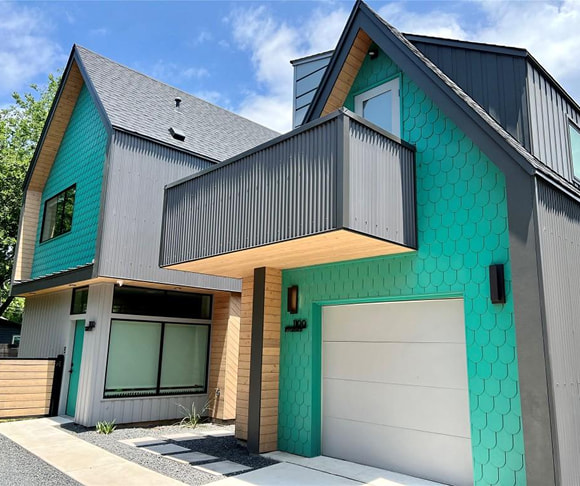
Suburban Estate
YOUR ESTIMATED TAX DEPRECIATION
YOUR ESTIMATED INVESTMENT COMMITMENT
Tier III $300K+ depreciation
Investor commitment from $260K

Resthouse
YOUR ESTIMATED TAX DEPRECIATION
YOUR ESTIMATED INVESTMENT COMMITMENT

Beach House
YOUR ESTIMATED TAX DEPRECIATION
YOUR ESTIMATED INVESTMENT COMMITMENT
Help clients solve a problem you already see.
For CPAs, Enrolled Agents, and Tax Advisors
Many high-income clients have already implemented traditional tax planning strategies. Yet substantial tax liabilities often remain. Elk Ridge provides a professionally managed real estate solution that can complement your existing tax planning process while allowing you to remain the client’s primary advisor.
What Our Partners Typically Experience
- Increased client retention
- Higher lifetime client value
- Expanded advisory opportunities
- Stronger client relationships
- Access to institutional-grade solutions
- No operational burden
- Dedicated implementation support
- Continued ownership of the client relationship
- Additional recurring tax engagements
- A scalable offering for high-income clients
Recommended CPA & Tax Advisors







Hear from high-income individuals using Elk Ridge to reduce tax exposure and build long-term wealth.
Airline Captain · Major Carrier
Chicago, IL
Anesthesiologist
Dallas, TX
Tech Executive
Bellevue, WA
A team of operators — not advisors.
Elk Ridge is led by partners who have spent their careers building and operating real businesses across real estate, capital, and tax-advantaged structures. You will work directly with the people who underwrite and operate every deal.

Lamè Kinikini

Ricky Maia
Oversees day-to-day operations and ensures consistent performance across all properties.

Zac Larsen
Manages portfolio strategy, asset underwriting, and capital deployment decisions.
Common questions
Specifics on the strategy, the structure, and what to expect across the hold.
Can short-term rentals really offset W-2 income?
Unlike traditional long-term rentals, qualifying short-term rental investments may allow investors to use depreciation losses against active income when applicable participation requirements are met.
Many of our investors are physicians, executives, airline captains, and business owners who are looking for ways to reduce substantial annual tax liabilities.
The amount you may be able to offset depends on your income, investment amount, tax profile, and participation level.
The fastest way to find out what’s possible for your situation is to schedule a Tax Savings Analysis with our team.
How much can I potentially save in taxes?
Some investors pursue Elk Ridge opportunities because the potential tax savings can be significantly larger than traditional tax planning alone.
The only way to determine your potential savings is to review your income, tax liability, and investment goals.
Schedule a consultation and we’ll walk through a personalized savings scenario based on your specific numbers.
Do I actually have to become a landlord?
Elk Ridge handles acquisition, financing, furnishing, operations, guest management, bookkeeping, reporting, and exit planning.
You don’t deal with guest complaints, contractors, pricing, cleaning crews, or day-to-day operations.
However, investors seeking certain tax benefits must still satisfy IRS participation requirements.
To support this process, Elk Ridge provides a structured participation system that includes technology-assisted workflows, activity tracking, and documentation support.
Most investors are surprised by how manageable the process becomes once they see the system. Schedule a call and we’ll walk you through it.
What are the 100-hour participation requirements?
- Participate more than 100 hours annually, and
- Participate more than any other individual involved in the activity.
Many prospective investors assume this means managing properties themselves.
It doesn’t.
Elk Ridge provides a structured participation framework designed to help investors document qualifying activities while our team handles the operational workload.
Want to see exactly how investors complete and document participation? Schedule a consultation and we’ll walk you through the process.
Is this better than buying an Airbnb myself?
Buying your own short-term rental means sourcing the property, arranging financing, managing contractors, overseeing operations, dealing with guest issues, coordinating cleaners, maintaining records, and planning the eventual exit.
Elk Ridge investors gain access to professionally managed assets while avoiding those operational responsibilities.
If you’re comparing self-management versus a professionally managed structure, schedule a call and we’ll show you the differences.
Why haven’t I heard about this strategy before?
Most financial advisors focus on public markets.
Very few professionals specialize in the intersection of real estate ownership, depreciation, and short-term rental tax treatment.
As a result, many high-income earners don’t discover the strategy until they’re facing six- or seven-figure tax liabilities.
If you’re wondering whether you’ve been missing an opportunity, schedule a Tax Savings Analysis and we’ll help you evaluate it.
How much do I need to invest?
Rather than recommending a generic number, we analyze your situation and determine what level of investment may align with your goals.
Schedule a consultation and we’ll build a personalized scenario based on your tax exposure and objectives.
Is this IRS compliant?
Like any tax strategy, proper implementation and qualification matter.
That’s why many investors choose to involve both their CPA and Elk Ridge throughout the process.
If you’d like to understand how the strategy applies to your specific situation, schedule a consultation with our team.
Is this considered a tax shelter for high-income earners?
STR tax strategy can be effective because a qualifying short-term rental is classified differently from a typical passive rental, allowing its depreciation losses to offset active income when the participation requirements are met.
What other deductions should I be maximizing before considering this?
The short-term rental tax strategy often makes the most sense once those tools are already in place and a meaningful tax bill remains. At that point, it may be worth looking at how to increase tax deductions without replacing the strategies you’re already using.
How does this compare to other ways high-income earners reduce taxes, like retirement accounts or municipal bonds?
This strategy works differently. It generates a real estate depreciation deduction against active income, which is a separate mechanism from tax-deferred growth or tax-exempt interest. Most people who use this strategy keep their retirement contributions and other tax-advantaged accounts in place and add Elk Ridge’s approach as an additional layer.
Is there a minimum income level where this makes sense?
Below that level, the capital commitment and participation requirements may not be worth it compared to simpler tools, such as maximizing retirement contributions. A tax-savings analysis may help clarify your specific situation.
Does this work for both W-2 and 1099 income?
Many of Elk Ridge’s capital partners have a mix of both income types, and the strategy applies to combined active income rather than to a single source. The specific benefit still depends on your total income and tax bracket, so results vary from person to person.
What's the difference between reducing my taxable income and reducing my tax bracket?
To reduce your tax bracket, or the rate applied to your income, you generally need either less income or a different way of characterizing your income, which this strategy doesn’t change.
Sometimes a large enough deduction can pull income out of a higher bracket, but the primary goal is the deduction itself, not a change in your marginal rate.
Can this strategy eliminate my tax bill?
Some participants see a bigger deduction than others, depending on their numbers. For high earners looking for a way to reduce taxes, a tax-savings analysis can help you see what a realistic outcome might look like in your situation.
From the journal.

How Financial Advisors Can Add STR Tax Mitigation to Their Services
Your client might not need another investment; they might need a better tax strategy. For advisors helping clients...

A Short-Term Rental Tax Strategy for Busy Doctors
Physicians can be strong candidates for a short-term rental (STR) tax strategy because they often have few ways to...

Why Your Rental Properties May Not Reduce Your W-2 Taxes
Plenty of high earners assume that owning a few rental properties or a diversified portfolio is enough to lower their...